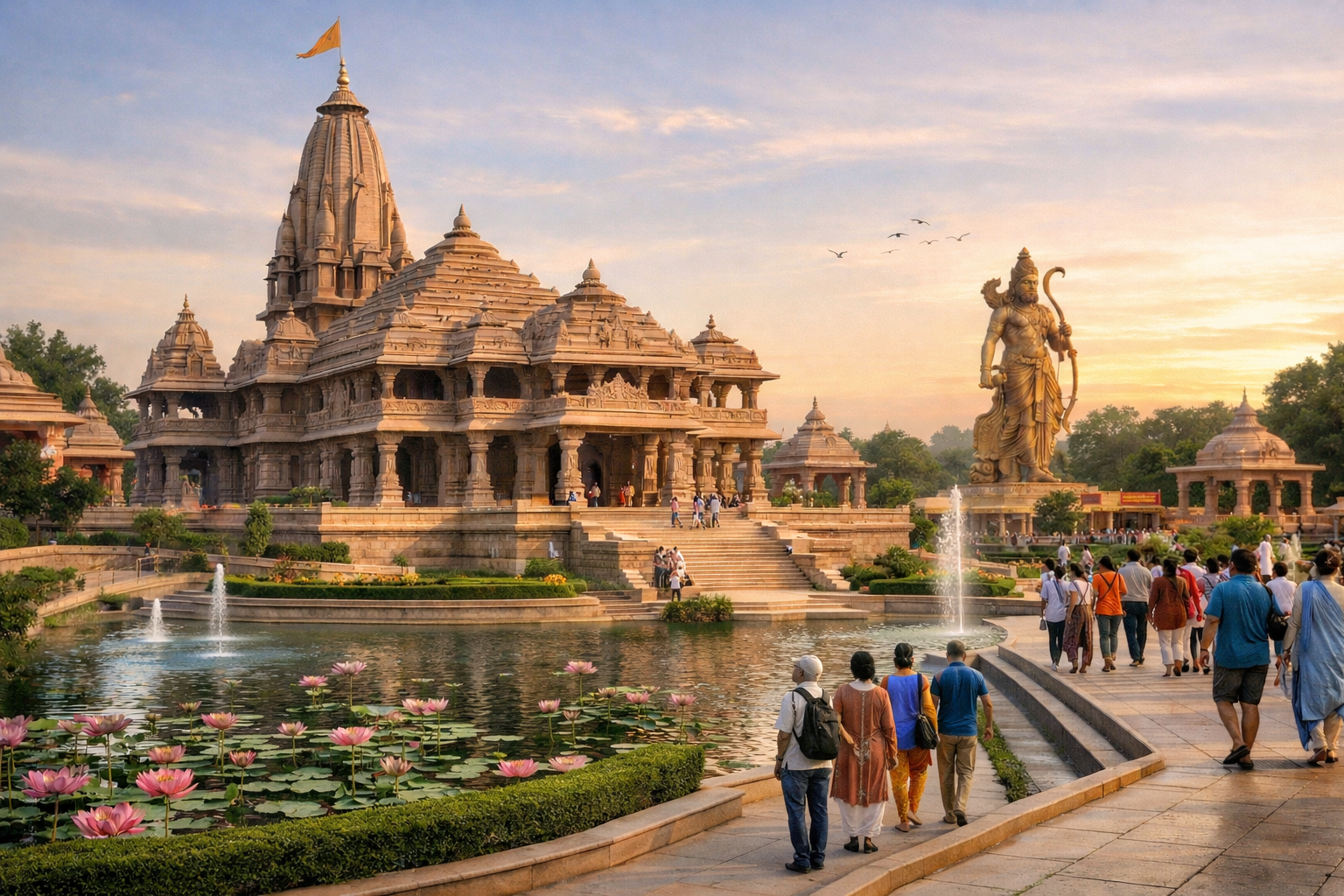
History and Significance
Ayodhya's history dates back to the Treta Yuga, as per Hindu texts. It was the capital of the Kosala Kingdom, ruled by King Dasharatha. The city is central to the Ramayana, where Lord Rama was born, exiled, and later returned. Archaeological evidence, including pillars from the Mauryan period (3rd century BCE), supports its ancient roots. In modern times, it's a UNESCO tentative site and a hub for Hindu pilgrimage.
Key Attractions
- Ram Janmabhoomi Temple: The birthplace of Lord Rama, currently under construction following a 2019 Supreme Court verdict. Features intricate carvings and a grand dome.
- Hanuman Garhi: A hilltop temple dedicated to Hanuman, offering panoramic views. Legend says Hanuman resided here during Rama's reign.
- Kanak Bhavan: A palace where Sita lived, adorned with gold and silver.
- Saryu River Ghats: Sacred bathing spots along the Saryu River, ideal for rituals.
Best Time to Visit
October to March (winter) for pleasant weather (15-25°C). Avoid summers (up to 45°C). Festivals like Ram Navami and Diwali see massive crowds.